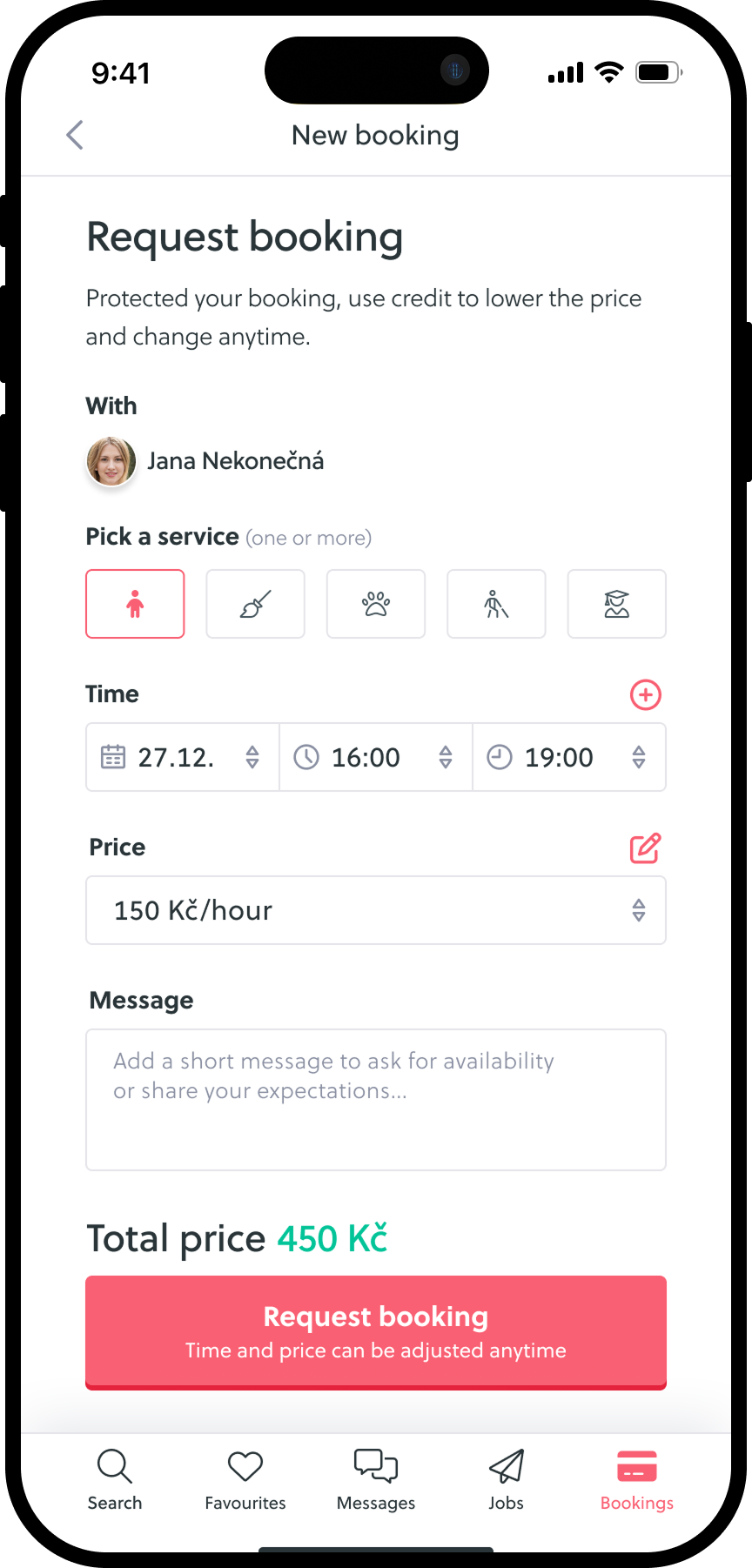
UX case study

Increasing Adoption of In-app Booking

UX Research Usability Testing Prototyping SaaS
Booking hero illustration

HLIDACKY.CZ | SITTERS.AT | SITERICE.HR | BEBICSOSZ.HU | HLIDACKY.SK

Marketplace platform operating across 5 European countries

Hlidacky.cz is a digital marketplace connecting families with caregivers for services such as babysitting, cleaning, pet care, tutoring, and elderly care. The platform serves over 600 000 registered users and operates across 5 Central European markets.

ROLE UX research, UX/UI Design
TIMELINE ~4 weeks
TEAM UX copy lead, Developer
TOOLS Figma, Maze

PROBLEM

Users avoiding the booking feature

Even though users paid for memberships that included booking credits, insurance, and in-app payments, most of them actually avoided using the booking flow. This created a disconnect between what the product was designed for and how people were really using it. As a result, engagement dropped, risk increased (bookings happening outside the platform), and it reduced the overall value of memberships.

SOLUTION
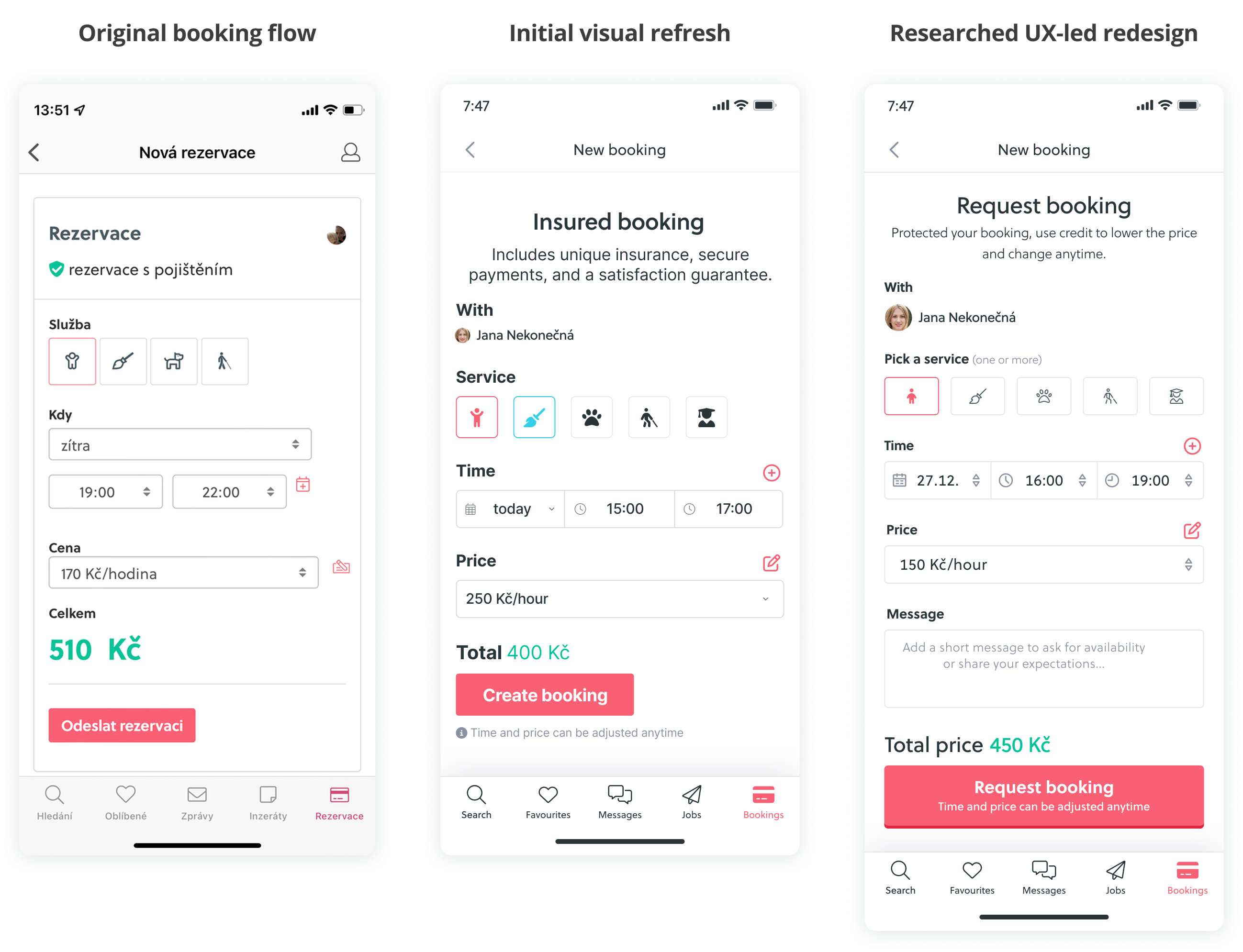
Making booking feel flexible and trustworthy

  • Reframing booking as a request, not a commitment
  • Let users communicate before confirming
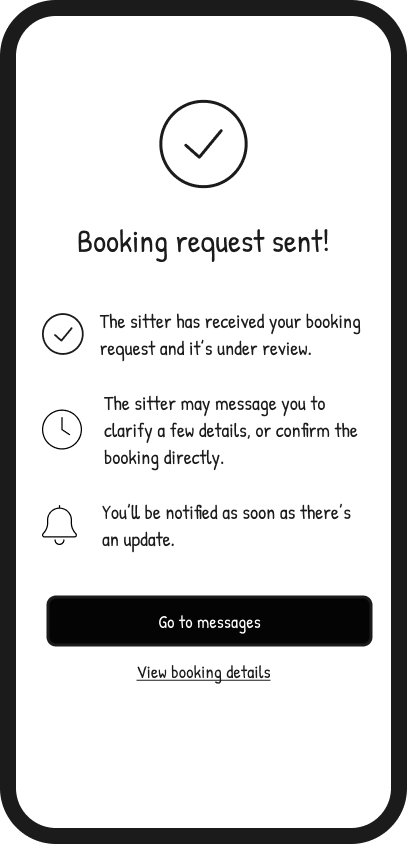
  • Clarifying what happens after booking
Before and after comparison of booking flow

Business goals

  • Improve user retention
  • Grow recurring revenue through higher engagement with booking
  • Ensure services are booked through insured in-app transactions

Constraints

  • Booking functionality already existed
  • Only one primary booking screen was available
  • Limited backend changes

PROCESS

Task-based usability testing

To understand what was really happening, I ran task-based usability tests on a Figma prototype of the current booking flow.


I used Maze to track how people interacted with the flow and which contact method they naturally chose.
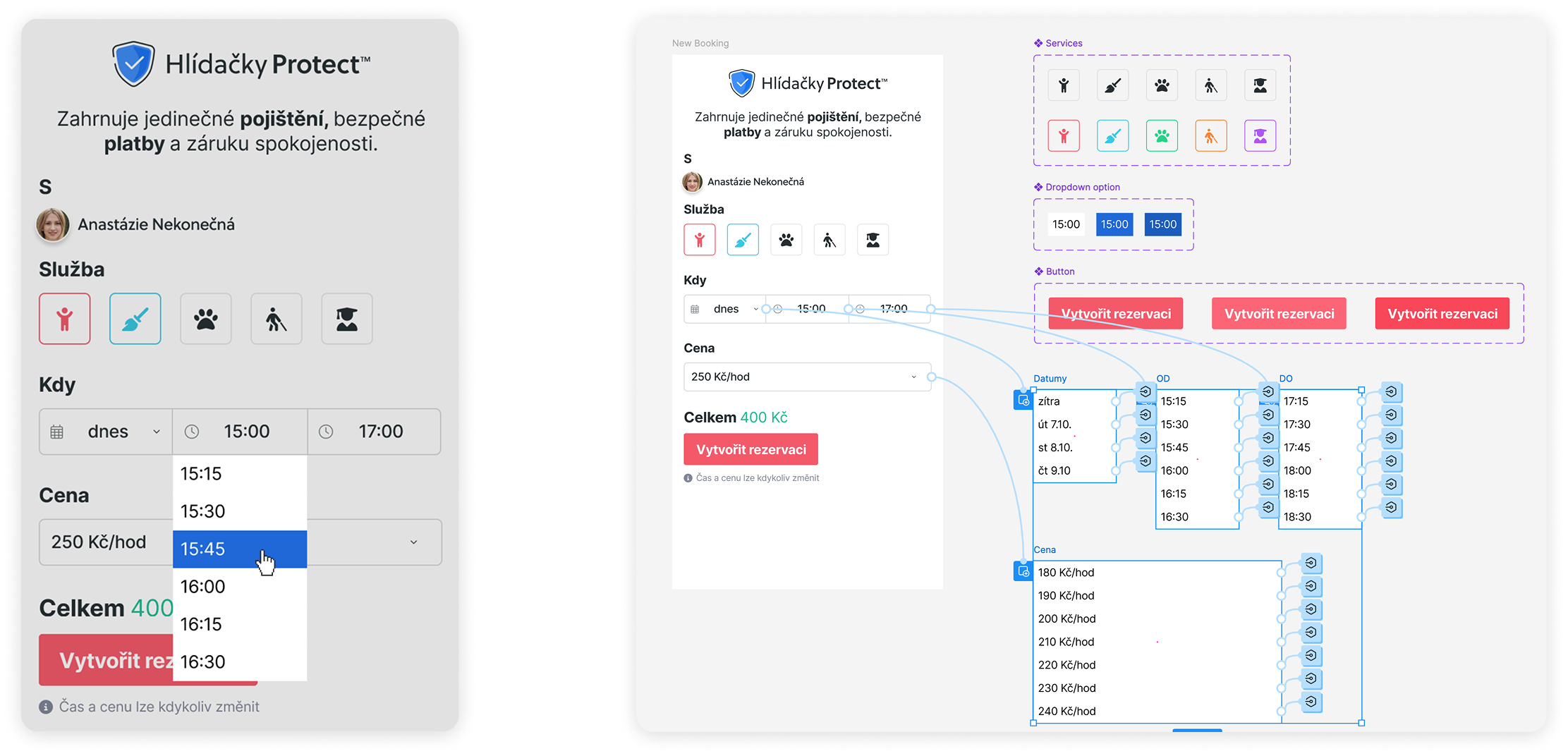
Prototype used for usability testing

RESEARCH

Qualitative follow-up questions & concept testing (A/B/C)

After completing the task, participants answered open-ended questions about what they were thinking, what felt unclear, and why they made certain decisions. I also tested 3 CTA variations to see which wording reduced hesitation and encouraged users to move forward.

PARTICIPANTS 76 valid qualitative responses
FOCUS Understand hesitation, expectations, and decision-making before booking

KEY INSIGHTS

Affinity mapping and user pain points

Users weren't avoiding booking because they didn't want to use it. They were hesitating because they didn't feel ready yet. Booking felt like a final step, while most users were still figuring things out.

28 %

perceived the booking button as too final

24 %

prefered personal contact before booking

16 %

concerned about the sitter's availability

Booking feels like a final commitment

I wasn't sure whether I could still change the time afterwards.

I feel like it becomes binding immediately.

Booking feels like the final step to me.

Users need communication before commitment

I need to agree on the details first before I confirm anything.

Messaging feels easier because we can both reply when we have time.

Booking feels too anonymous

Lack of transparency increased anxiety

I'm worried the sitter won't confirm the booking.

I'm not sure whether the booking will be confirmed in time.

I don't know what happens after booking

IDEATION & IMPROVEMENTS

4 main improvements

Based on research and feedback I suggested these 4 main improvements:
/1

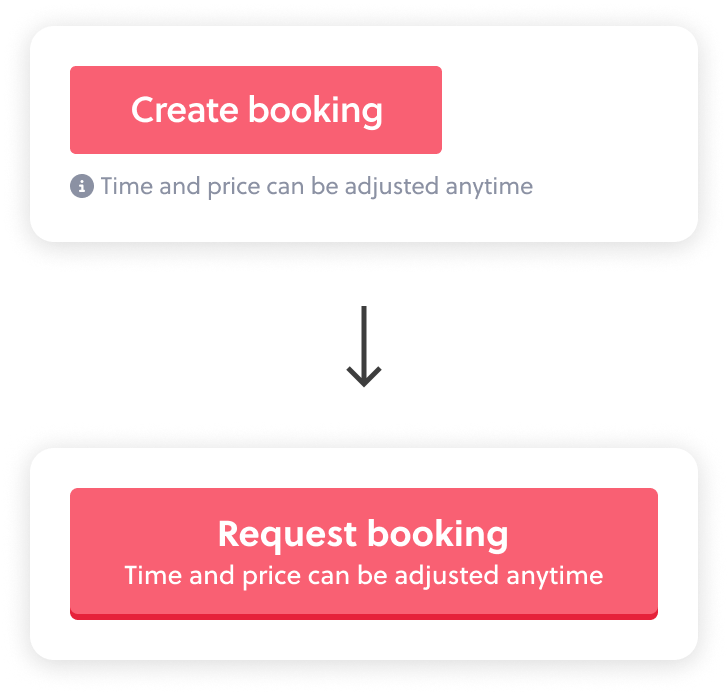
Changes in booking CTA

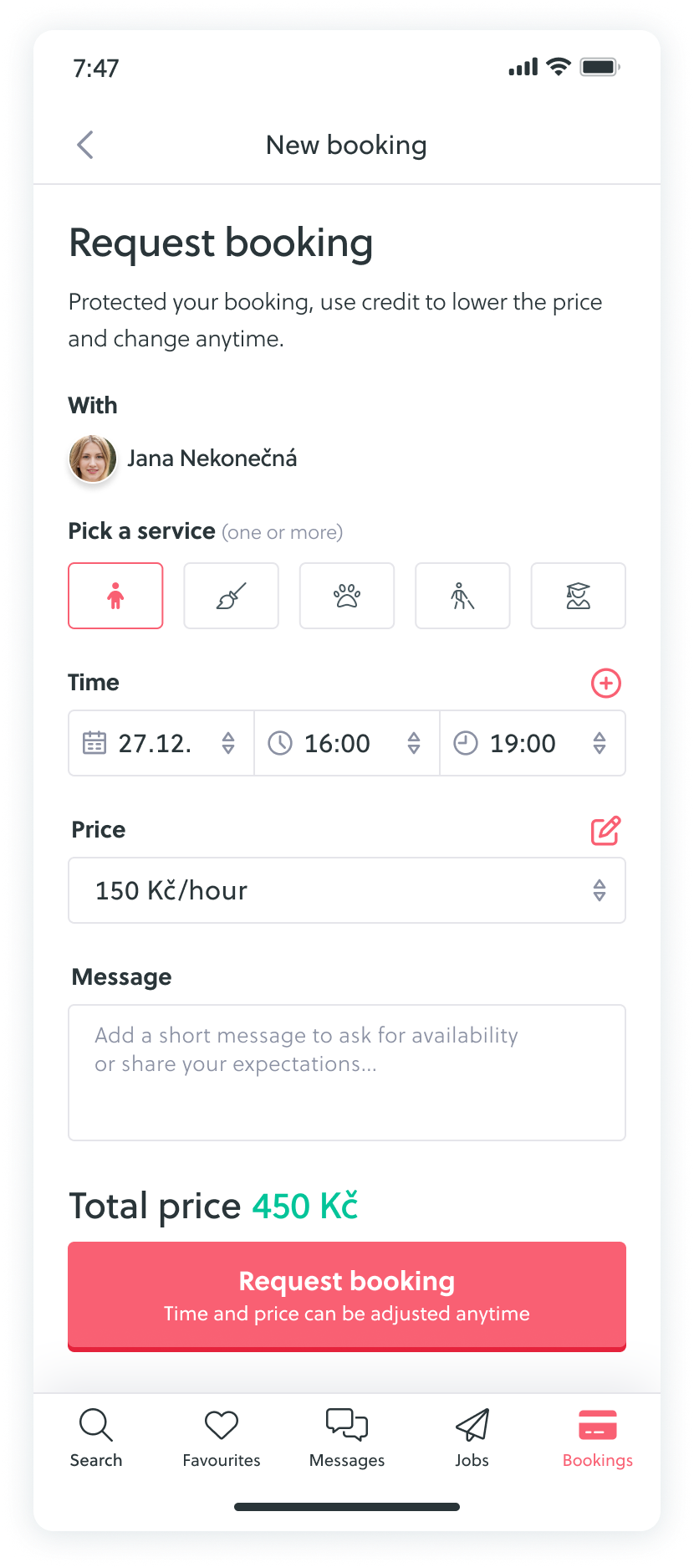
  • I changed the CTA from "Create booking" to "Request booking" to reduce the feeling of commitment.

  • Moved the reassurance text "Time and price can be adjusted anytime" inside the primary booking button instead of below it, after testing showed users were overlooking the message
Before and after CTA button comparison
/2

Introducing a messaging option

  • Introduced a message field within the booking screen so users could ask questions or clarify details before sending a request.
Messaging option in booking flow
/3

Making next steps clear

  • I proposed adding a simple explanation of what happens after booking, so users know what to expect and don't feel uncertain.
Post-booking transparency screen
/4

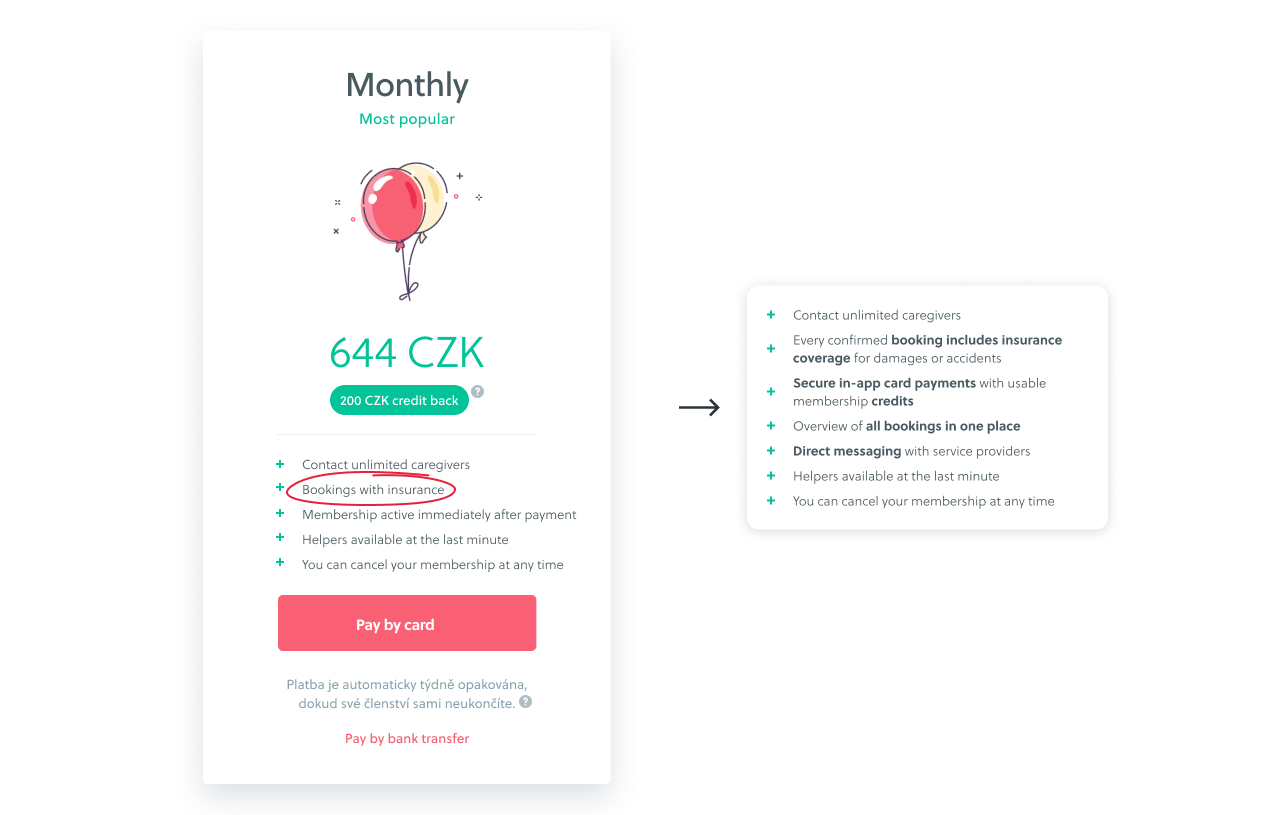
Improve pricing page communication

  • The pricing page didn't clearly explain why booking mattered.

  • I suggested restructuring it to highlight the full value of booking (insurance, safety, convenience), not just list features.
Pricing page improvements

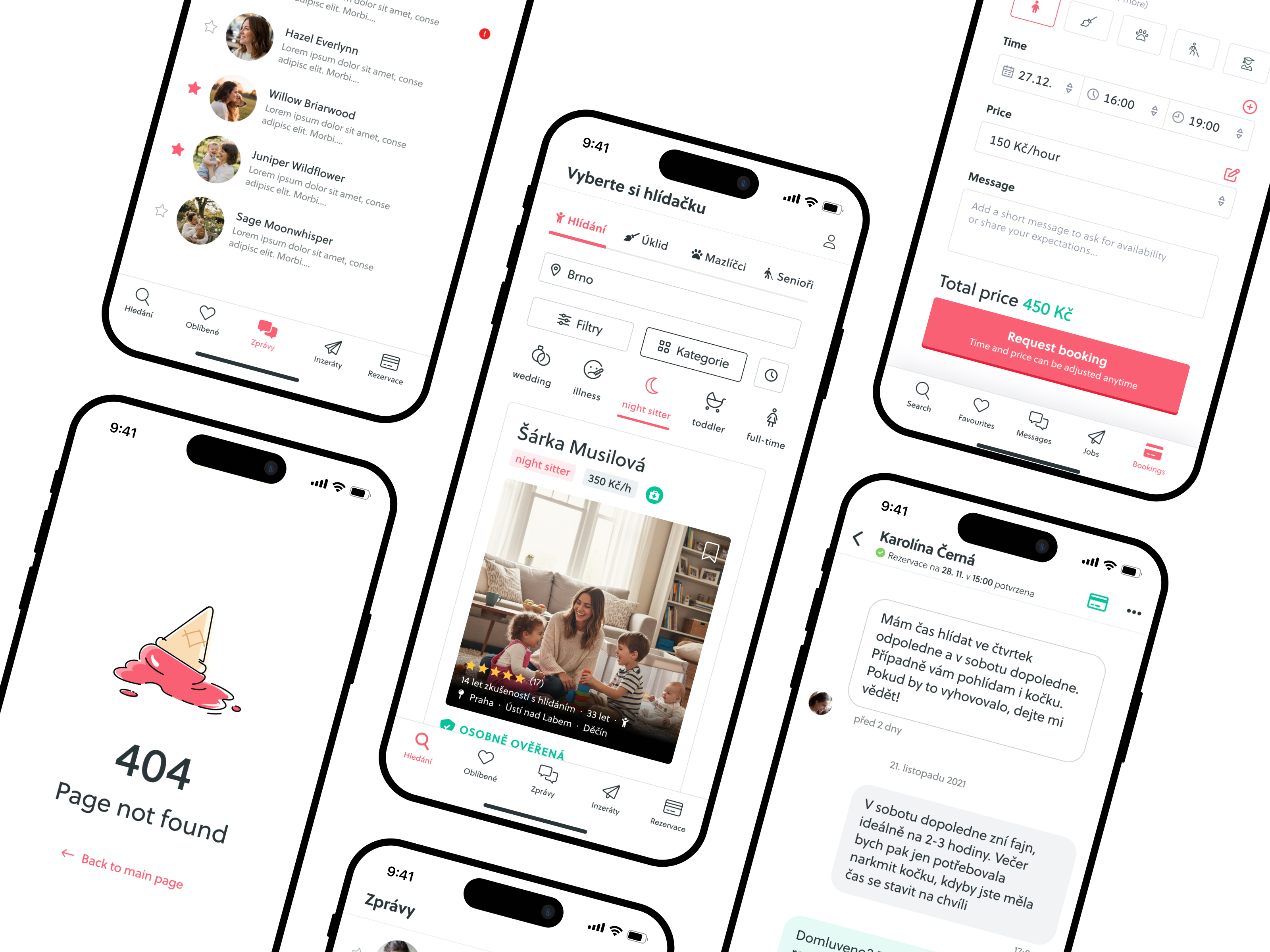
Final designs

The final designs focused on reducing perceived commitment, improving clarity around next steps, and showing the value of booking earlier in the journey.
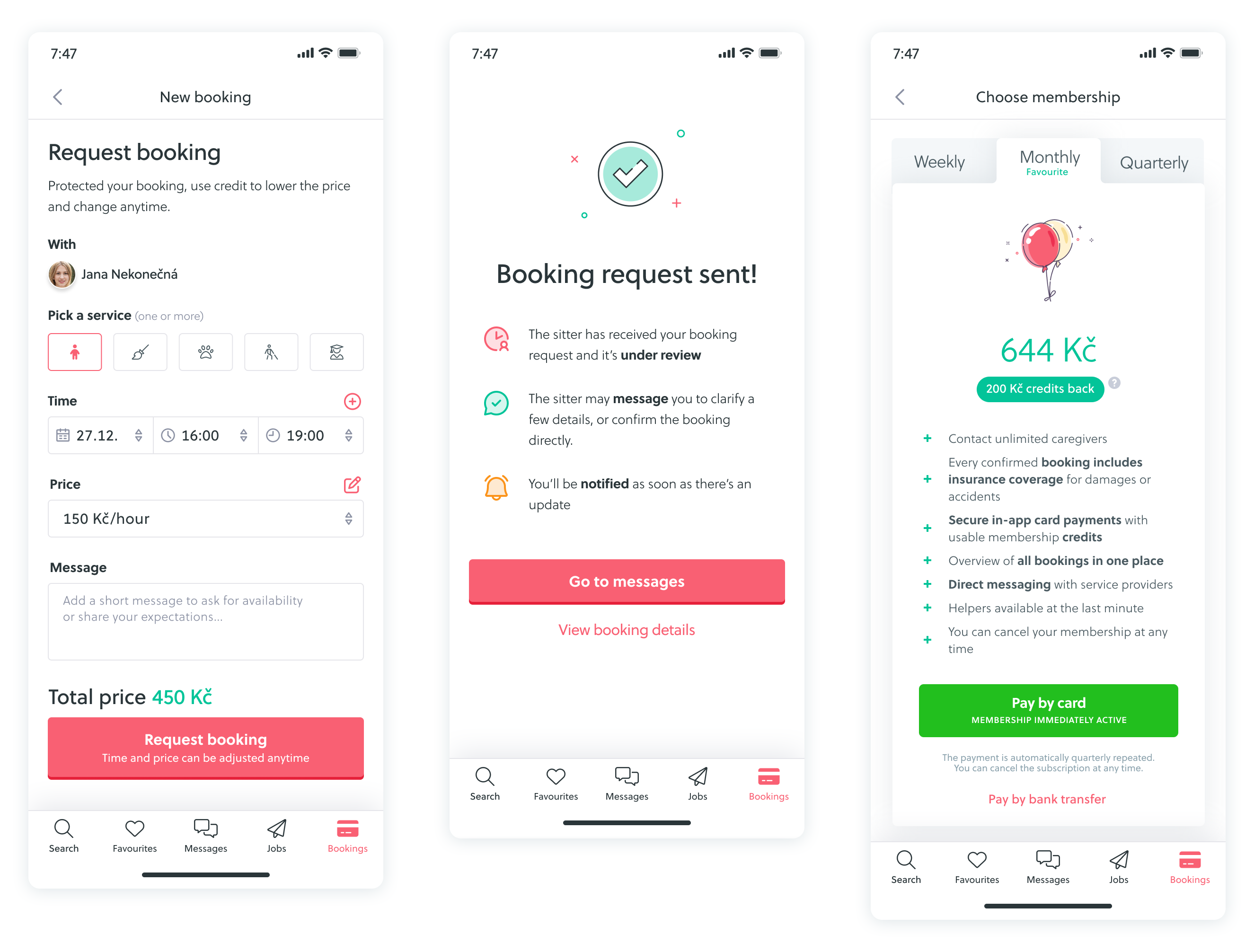
Final design screens

VALIDATION

A/B testing in progress

The updated booking flow is currently being A/B tested. Final results are still pending.


Suggested metrics to track:
  • Increase in booking feature adoption
  • Decrease in off-platform communication
  • Higher membership engagement and retention
  • Decrease in customer support cases related to uninsured bookings

Learnings

Next Steps

More case studies

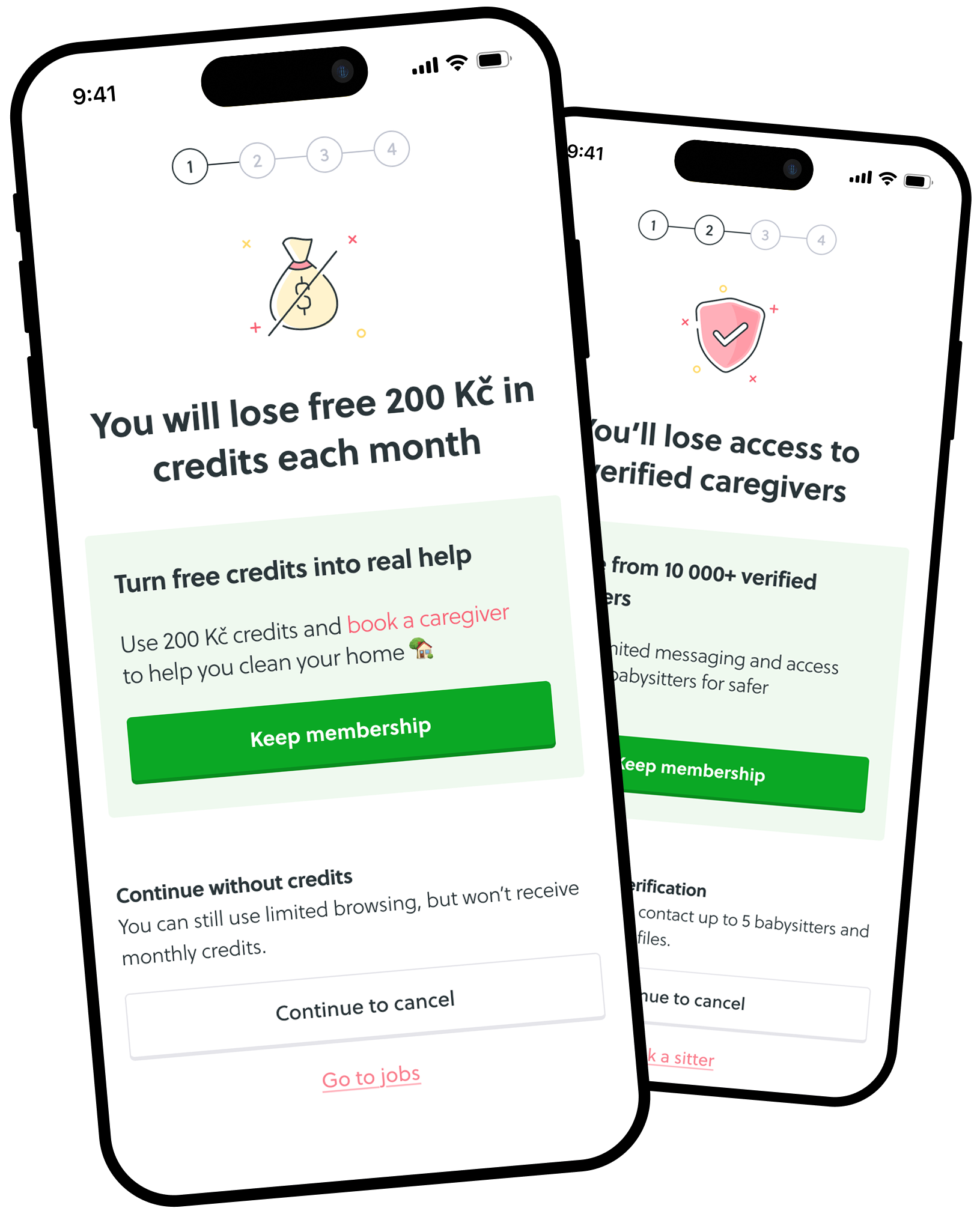
Improving Subscription Retention in Membership Cancellation

Improving Subscription Retention in Membership Cancellation

UX heuristics Wireframes A/B testing SaaS
Selected Product design screens

Selected Product design screens

Product Design Design System UI SaaS